
VA – Automated Conversion Agent (ACA)
Modernizing Financial Data Conversion for FMBT / iFAMS
Overview
Designed a guided workflow to support legacy-to-iFAMS financial data conversion.
The experience replaces fragmented spreadsheet-driven processes with a structured, step-by-step interface that makes parsing, mapping, validation, and audit review visible and traceable.
This was built as a high-fidelity demonstration aligned to FMBT and iFAMS standards.
Prototype walkthrough: Inputs → Parsing → Results and Validation.
The Problem
VA financial conversions were:
Spreadsheet-heavy
Rules stored in disconnected documents
Hard to validate before submission
Difficult to audit end-to-end
Users had limited visibility into:
What was uploaded
How mapping rules were applied
Where errors occurred
Whether outputs were audit-ready
The process was technical, opaque, and risky.
My Role
Led UX design for the Automated Conversion Agent, translating complex financial conversion logic into a structured, transparent, and audit-ready workflow aligned with FMBT and iFAMS standards.
Design Challenge
How might we translate a highly technical, rules-driven financial conversion process into a structured, confidence-building experience that:
Reduces user error
Surfaces issues early
Makes transformation logic visible
Supports audit and traceability
My Approach
I structured the experience into 3 clear phases:
Inputs
Parsing & Mapping
Results & Validating
Each step mirrors how analysts already think, but removes ambiguity and hidden logic.
Step 1: Structured Inputs
Users upload:
Input Data File
Interface Control Document (ICD)
Accounting Crosswalk
Instead of silent uploads, the UI:
Confirms records loaded
Flags missing requirements
Shows readiness state before proceeding
This prevents blind processing.
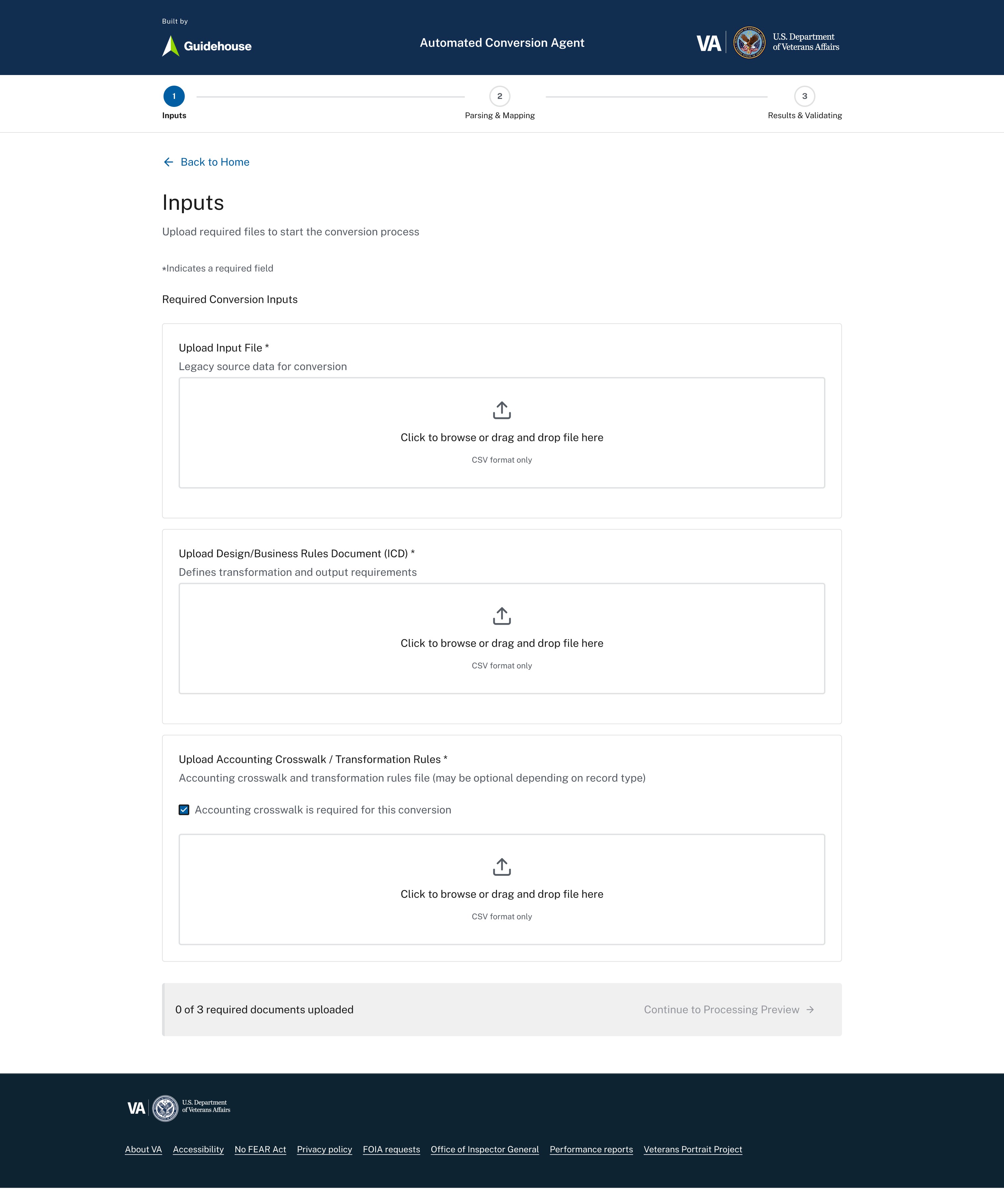
Structured file intake aligned to defined mapping and financial transformation rules
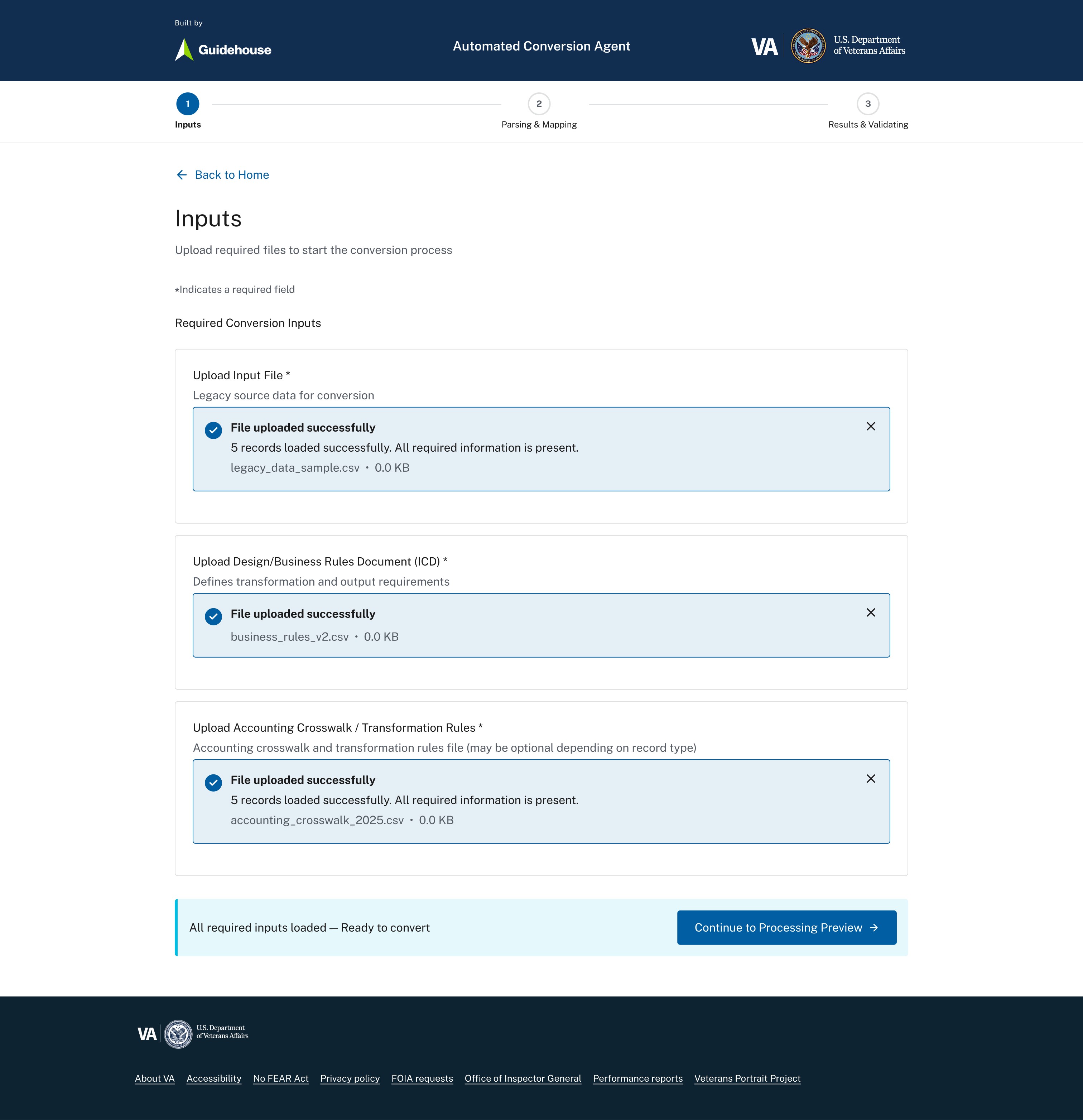
Upload confirmation with record counts and readiness validation before processing.
Step 2: Parsing & Mapping Preview
Before conversion completes, users see:
Parsed transaction preview
Applied accounting crosswalk
Record counts
Mapping references
This step makes transformation logic visible.
Users can validate:
Transaction type mapping
Fund status mapping
SOC alignment
Vendor relationships
No black box behavior.
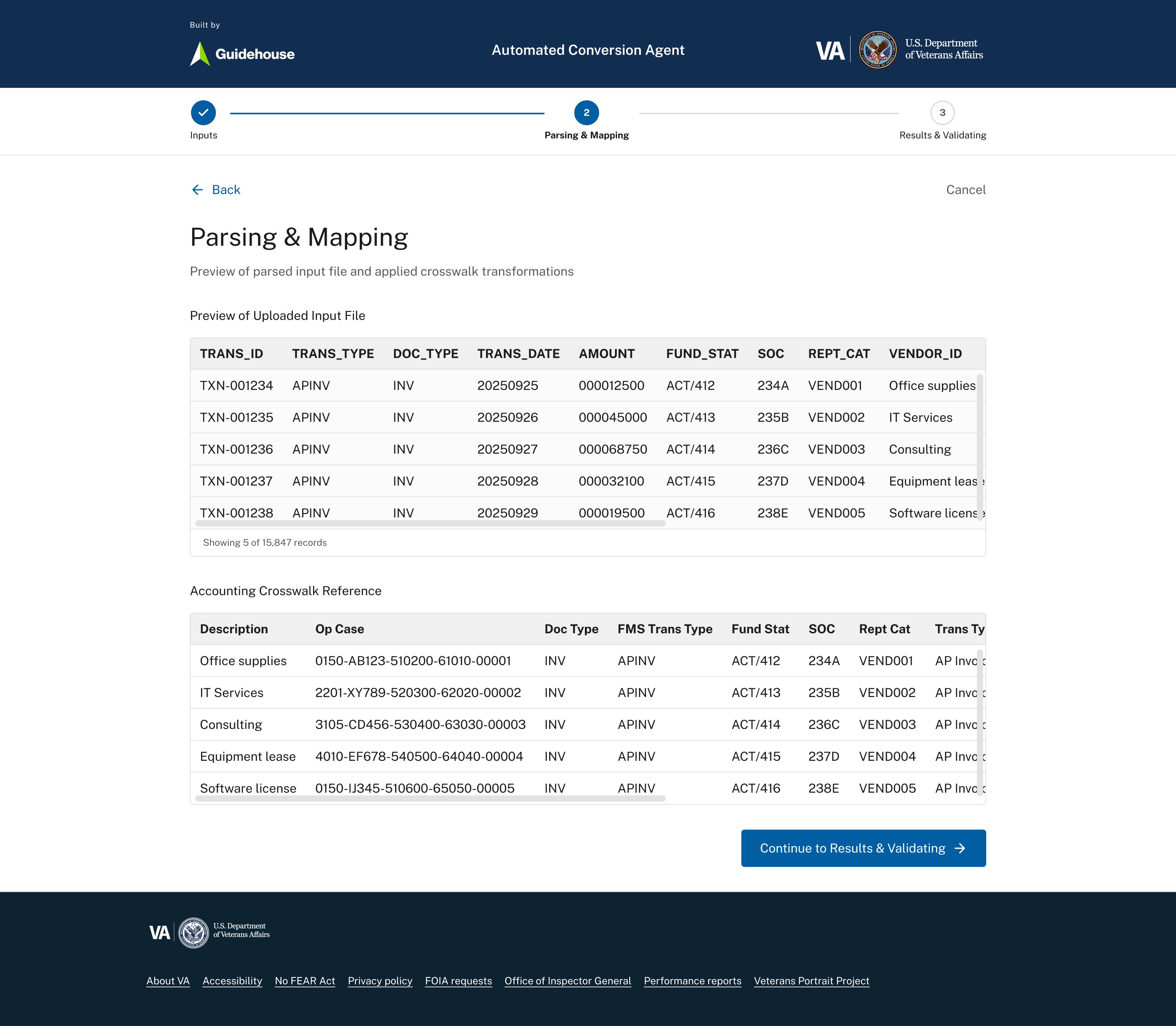
Parsed transaction preview showing applied accounting crosswalk and mapped fields.
Mapping logic surfaced before output generation to increase transparency and trust.
Step 3: Results & Validation
After processing, users review:
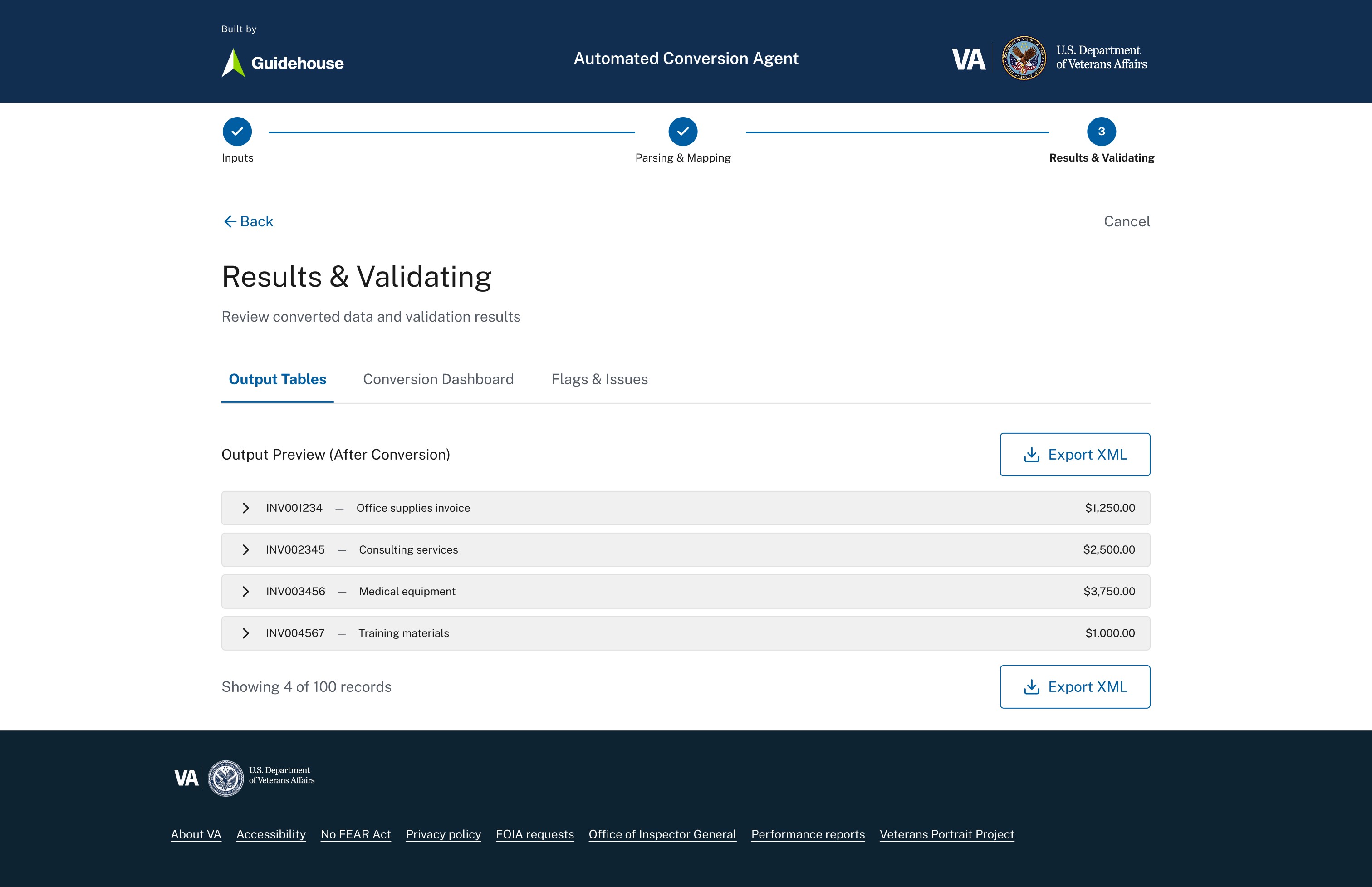
Output Tables
Expandable AP headers and line details
Exportable XML
Conversion Dashboard
Input records loaded
Records created
Success rate
Invoice totals
Accrual totals
Flags & Issues
Clear breakdown of:
Errors
Warnings
Field-level mismatches
Missing mappings
Severity is visible.
Details are contextual.
Fields are traceable.
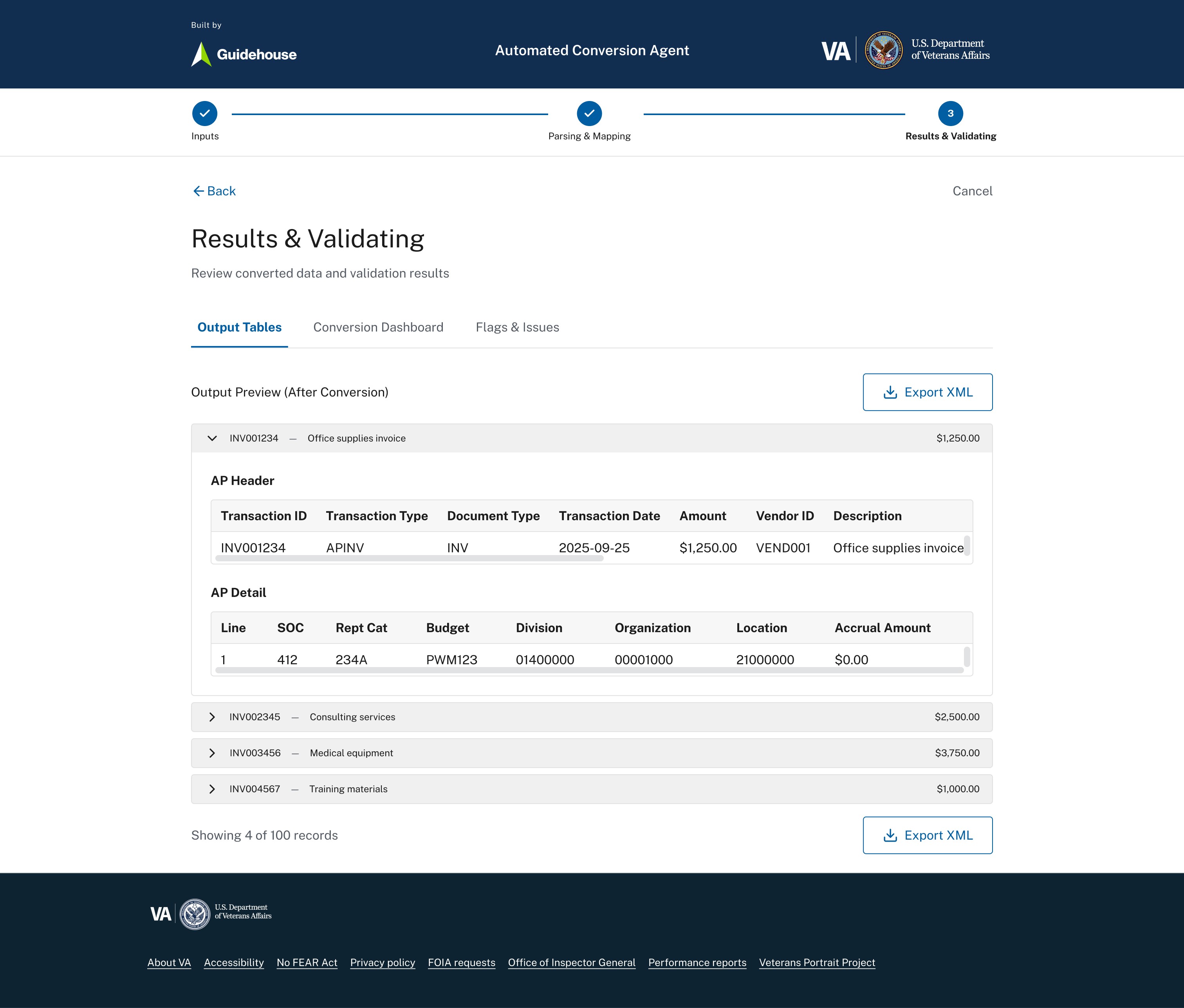
Conversion dashboard summarizing records processed, totals, and success rate
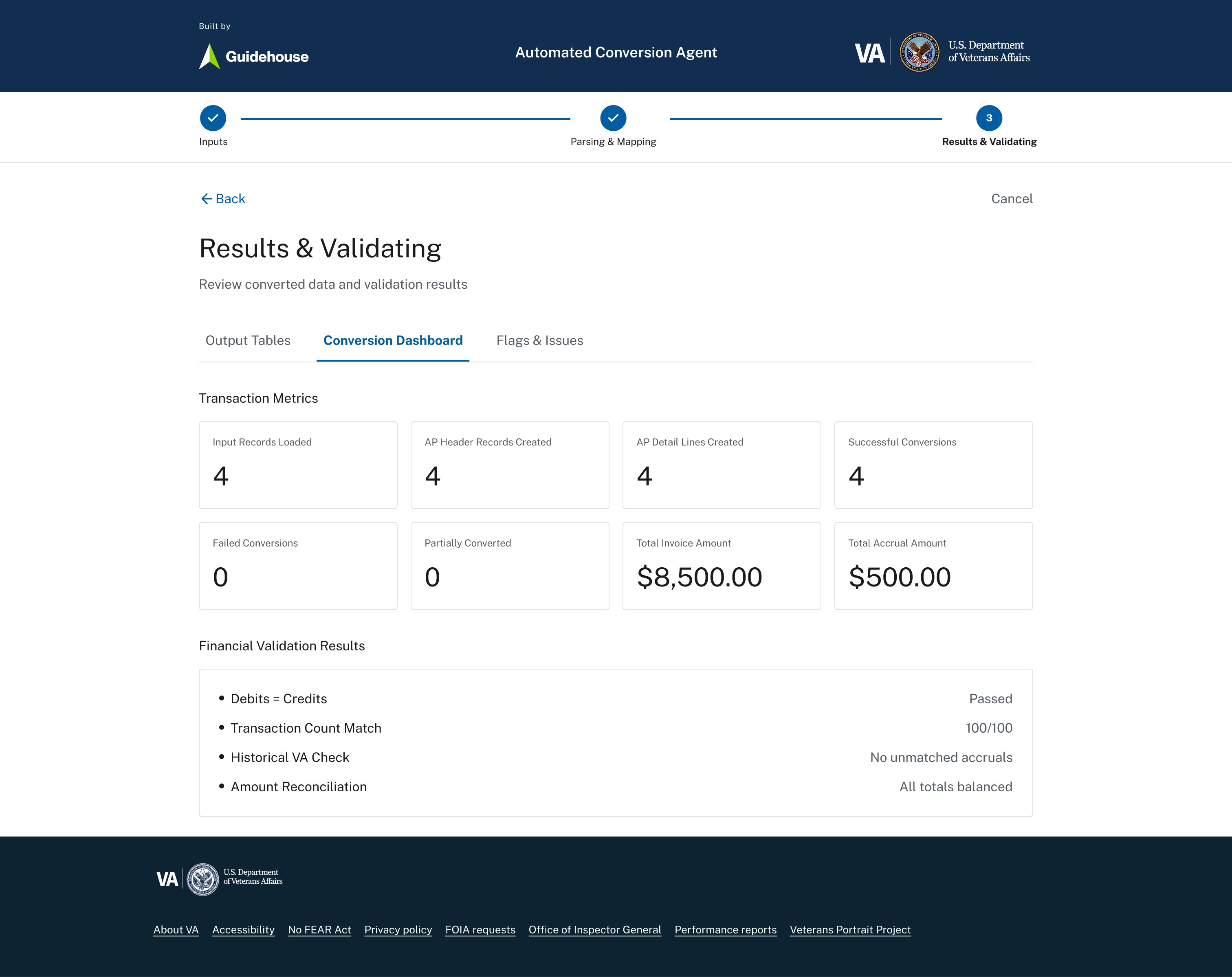
Detailed output view with expandable records and export-ready structure.
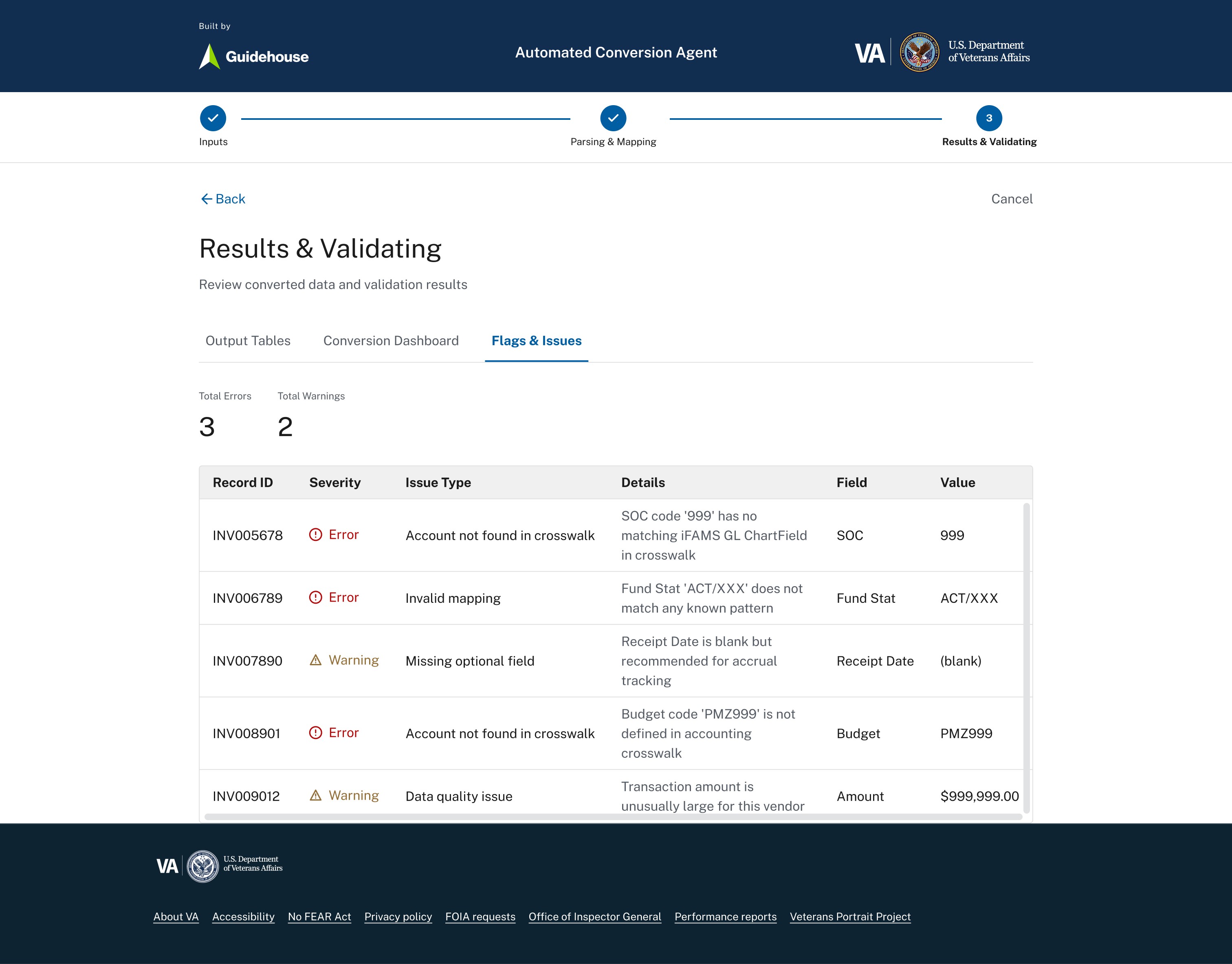
Error and warning breakdown with severity indicators and field-level traceability
Persistent Conversion History
The history dashboard provides:
Total runs
Success trends
Subsystem breakdown (AP, AR, GL, Fixed Assets)
Historical success rate
Red flags
This supports:
Audit review
Performance tracking
Risk monitoring
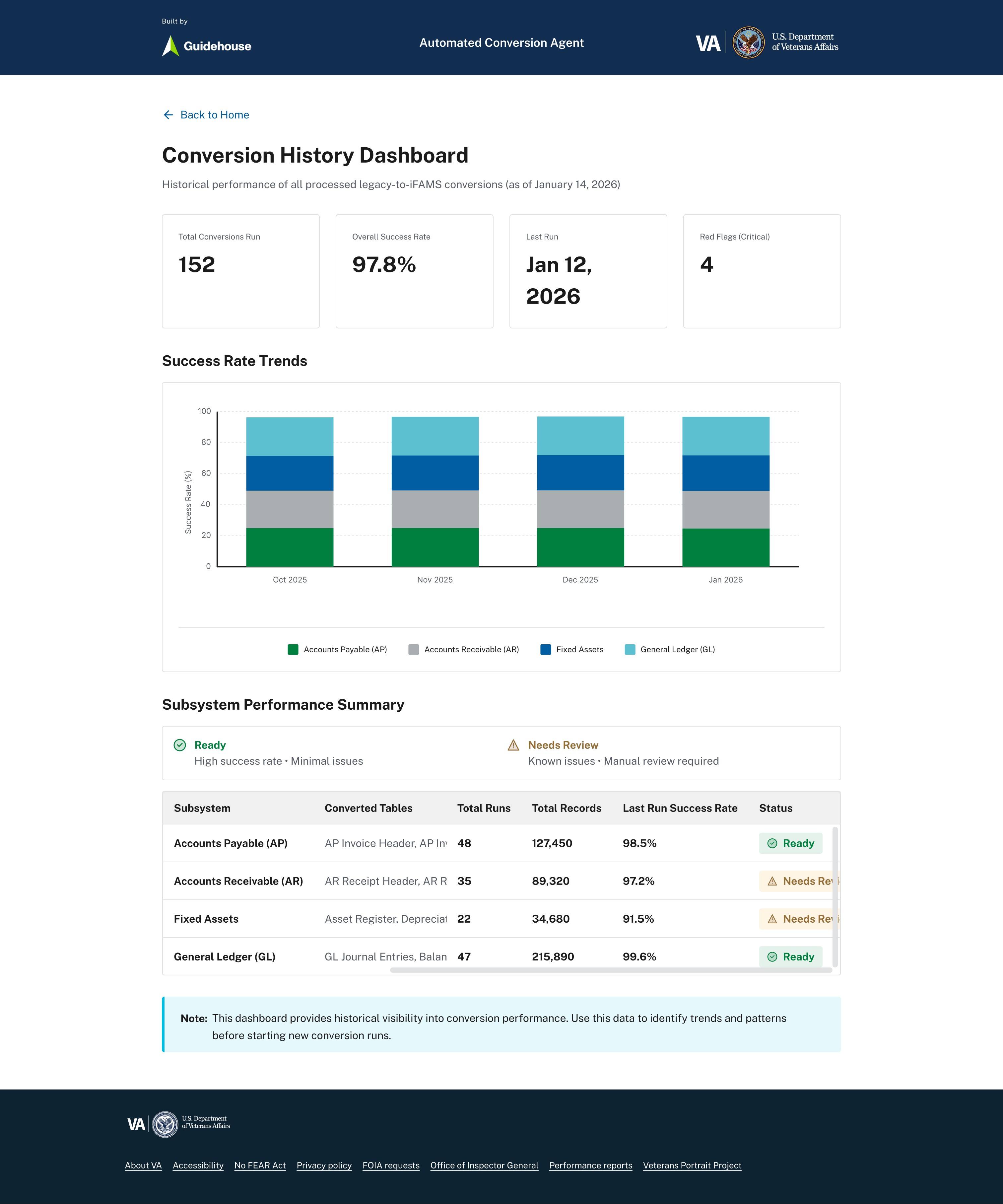
Historical run dashboard tracking subsystem performance and conversion trends over time.
Key UX Decisions
1. Linear, guided workflow
Reduces cognitive overload in a technical process.
2. Preview before commit
Users validate logic before generating outputs.
3. Transparent error handling
No generic “failed” messages.
Each issue includes record ID, field, and value.
4. Metrics alongside detail
Users see both macro performance and micro-level breakdowns.
5. VA-aligned visual system
Familiar, formal, structured. Built for trust.
What This Demonstrates (From a UX Perspective)
Turning a rules-driven backend process into a clear front-end workflow
Designing for auditability and compliance
Making AI/automation explainable
Supporting financial governance through UI clarity
Reducing perceived risk through visibility
Outcome
Standardized conversion workflow
Visible transformation logic
Structured validation before export
Audit-ready outputs
Reusable UX blueprint for future interface tooling
This shifts conversion from “technical batch process” to “guided financial workflow.”